Book Review: The Woman who was Chesterton

The world is growing in knowledge and appreciation for the writings of G.K. Chesterton. As we expand our knowledge about this prolific man, Nancy Carpentier Brown adds a critical piece to the story: a biography of Chesterton’s wife, Frances, entitled The Woman who was Chesterton. Prior to Brown’s book, very little was known about Frances. However, Brown reveals that in order to truly know and appreciate G.K. Chesterton, we have to acquaint ourselves with the woman behind the man.

411MHlGxMKL._SX326_BO1,204,203,200_I found Brown’s depiction of Frances to be graceful, thorough and insightful. She brings Frances to life in a way that respects her memory while adding many missing pieces to her previously unknown life. As I read this biography, I grew in my fondness for Frances and by coming to know her, I desire to know more about her writings as well as her husband’s.

Frances was a devoted wife. Brown highlights her humility and her wisdom that we can see throughout her life. Though Frances was a literary talent, she recognize the genius her husband possessed. She was the one who made sure he made it to speaking engagements on time. She maintained nearly all of the couple’s correspondence. She was his sounding board, helping him clarify and hone in on his ideas.

Brown deftly shows us that Frances is a person in her own right, worth noticing and knowing. If anyone is interested in the work of G.K. Chesterton, their study is not complete until they have come to know the woman who made the man possible.

Guaranteed Right Answer

While in college, I participated in a music ministry program. We were a group of students, musically inclined, that studied the liturgy together and collaborated to select the music, coordinate the choirs, and play/sing at the Masses. We met periodically with the heads of the campus ministry music program to learn more about the liturgy, how to select appropriate music and grow together as a community.

In particular, we studied the Vatican II document Sacrosanctum Concillium (SC), the Constitution on the Sacred Liturgy. Periodically, we would have quizzes on what we were learning. Our liturgy director would jokingly say, “If you don’t know the answer, just put down SC #10. It covers everything. This is the famous source and summit passage. Simply put, the liturgy is both the source from which the Church and her people draw their faith and the summit toward which all the actions of the Church are aimed. It really encompasses everything.

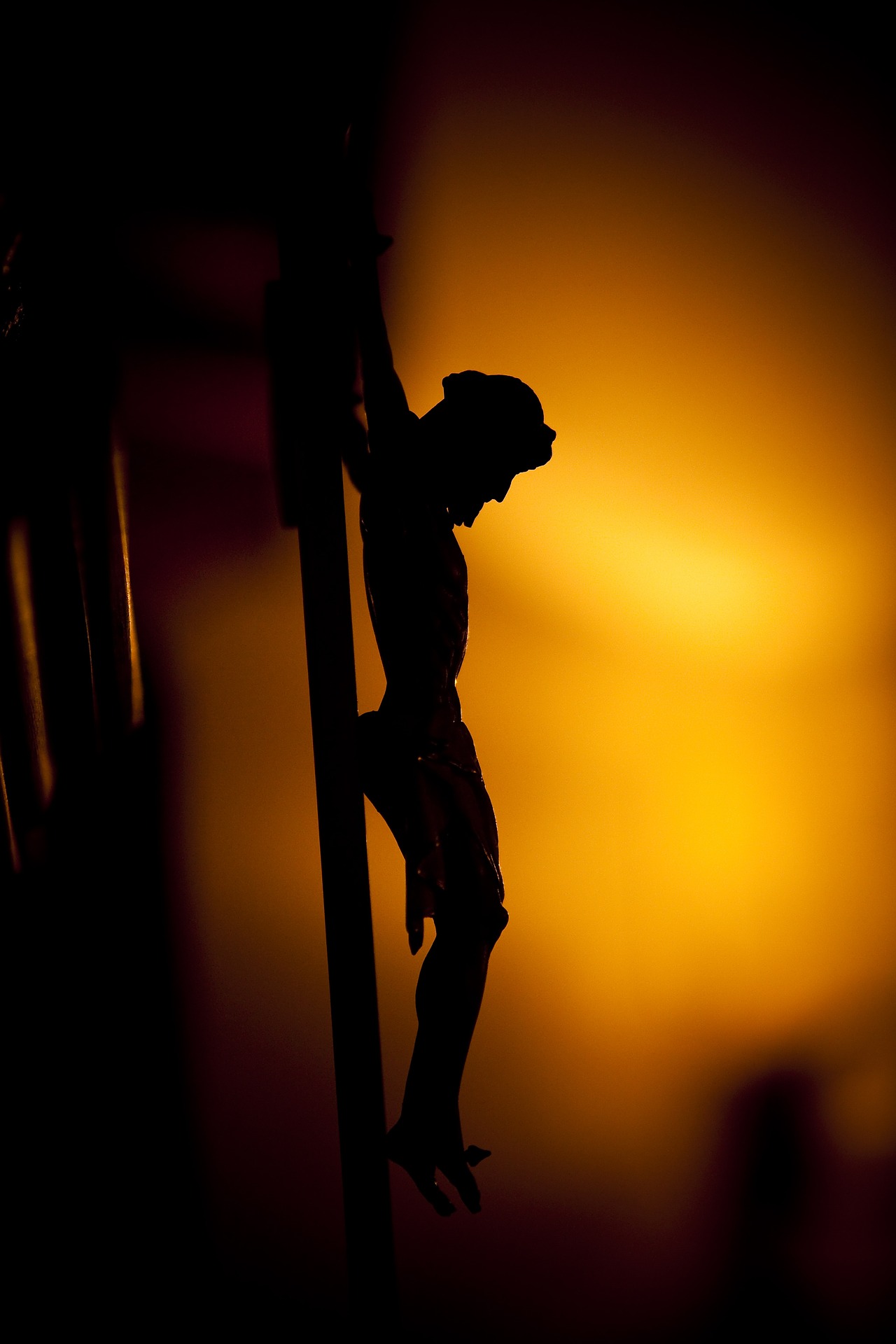
As I was driving home with John from Sunday school, this memory came to mind. I had asked John what he had learned about that day. He did the typical “I don’t know.” I pressed him further, asking if they had heard any stories. He said, yes, one about Jesus. I asked what Jesus was doing in the story. “Dying on the cross” was his answer.

Now, it is very possible that they did talk about the sacrifice of Jesus, but I am inclined to think that they probably did other things, based on the papers he was sent home with. Regardless, John taught me a very important lesson about our faith.

When it all is boiled down, our faith is about the Passion, Death and Resurrection of Jesus, the Paschal Mystery. Without the Paschal Mystery, we just have a nice guy who said some unique things a long time ago. The power, the compelling witness, the suffering faith of Christians everywhere, comes from the Paschal Mystery – the source. As Christians, we are called to become Christ.

jesus-753063_1920But whoever keeps his word, the love of God is truly perfected in him. This is the way we may know that we are in union with him: whoever claims to abide in him ought to live [just] as he lived. (1 John 2:5-6).

The summit.

So in a way, John got it right. Regardless of what they actually talked about, it can be traced back to the source, to Jesus. And at the same time, it pointed toward our ultimate goal, union with Jesus.

Where is Grace?

For a blog about finding daily grace, it has been so difficult to hear of the violence, hatred, and suffering that is happening daily in our world, in particular Beirut and Paris. In the face of such despair, it is tempting to cry out, “Where is God? Where is His presence? Where is His grace?” We might even be tempted to abandon our hope, to give into the false testimony of the Devil, for indeed he is the one nudging us on this path. When we are faced with feelings such as this, we must recall the promises God has made. The promise of His continued presence, of His loving mercy, and of His grace.

Where can I go from your spirit?

From your presence, where can I flee?

If I ascend to the heavens, you are there;

if I lie down in Sheol, there you are.

If I take the wings of dawn

and dwell beyond the sea,

Even there your hand guides me,

your right hand holds me fast.

  • Psalm 139: 7-10


The LORD’s acts of mercy are not exhausted,

his compassion is not spent;

They are renewed each morning—

great is your faithfulness!

  • Lamentations 3:22-23


So let us confidently approach the throne of grace to receive mercy and to find grace for timely help.

  • Hebrews 4:16

God’s grace is everywhere. However, because of our free will, it is up to us whether or not we choose to participate in it.

the-eiffel-tower-103417_640I leave you with this quote from Cardinal Vingt-Trois, the Archbishop of Paris:

Faced with the violence of men, may we receive the grace of a firm heart, without hatred. May the moderation, temperance and control that has been shown so far, be confirmed in the weeks and months to come; let no one indulge in panic or hatred. We ask that grace be the artisan of peace. We need never despair of peace if we build on justice.