Cooking in Lent

Though Ordinary Time has just begun it is a short beginning. Preparations are already underway for Lent’s quick approach next month. One of the primary aspects of Lent is fasting, particularly from meat on Ash Wednesday and all Fridays during the season. 

Lent has a unique relationship with food. On one hand, it encourages us to eat more simply, to fast and abstain. Many people choose to fast from some kind of food or drink, like giving up sweets, soft drinks or alcohol. But then by some weird logic, the very act of giving up certain foods then seems to create a fixation with that food. Abstaining from meat means I spend a good deal of time that week looking up meatless recipes and alternatives. If I’m not careful, the whole purpose behind the fasting is lost by a hyper focus on what I’m not eating and how to cook for my family. 

Rather than creating a barrier, this Lent let’s allow cooking to open us up to God’s presence in our kitchen. Cooking, by its very nature, connects us with the Paschal Mystery. 

“Like fire itself, which photosynthesis destroys has created, all cooking begins with small or large acts of destruction: killing, cutting, chopping, mashing. In that sense, a sacrifice is at its very heart” (Michael Pollen, Cooked, pg 52).

The Paschal Mystery is the theological term for the life, death, Resurrection and Ascension of Jesus Christ. Jesus teaches us through His whole existence on Earth what it means to be an offering of oneself. Through His sacrifice, we receive life everlasting. Each time we cook, the sacrifice inherent within the food we prepare offers us life for another day. 

Cooking During Lent

We need to eat everyday, which means we cook everyday of the year. What can we do to make our cooking different during Lent? One idea is to slow our cooking down. “When stirring the pot, just stir the pot. It seems to me one of the great luxuries of life at this point is to be able to do one thing at a time, one thing which you give yourself wholeheartedly. Unitasking” (Cooked, pg. 195). Many of us rarely see this luxury. It’s not that we don’t have the time, it’s that we haven’t prioritized the time. 

This isn’t to say that each day you need to stand slavishly in front of the stove for hours, methodically stirring while your kids tear the house down around you. But you don’t need to be checking Instagram while stirring either. Maybe it means preparing elements of your meals in bulk ahead of time so you are better able to focus on what must be cooked day of. Things like rice, polenta, beans and mashed potatoes are excellent make-ahead sides. Think about carrot and celery sticks, bell pepper slices, fruit salad or sliced oranges. 

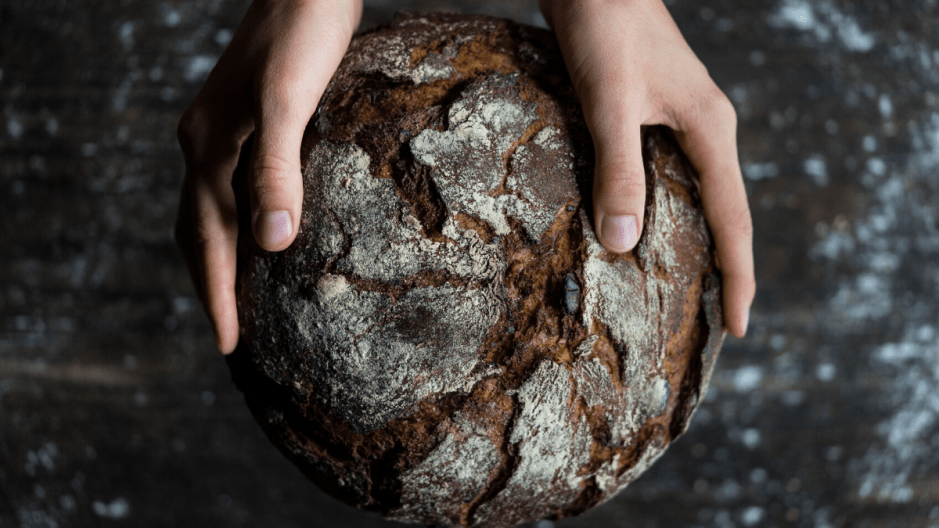
Another idea for cooking more intentionally this Lent is to learn how to make something yourself which has otherwise intimidated you or alluded you. What might you learn from making your own bread or yogurt? Have you considered what goes into making jam or homemade pie crust? Perhaps you’ve always wanted to make your own baby food or salad vinaigrette but have never taken the time to learn. When you make food “from scratch” you begin to learn how it’s components work together to form their new whole. There is a transformation that occurs as ingredients move toward harmony among each other. 

It is incredibly empowering and humbling to make your own food. Only after making your own bread will you begin to understand a person who, in order to have bread that day, must first make it. “To brew beer, to make cheese, to bake a loaf of bread, to braise a pork shoulder, is to be forcibly reminded that all of these things are not just products, in fact they aren’t even really ‘things.’ Most of what presents itself to us in the marketplace as a product is in truth a web of relationships, between people, yes, but also between ourselves and all the other species on which we still depend” (Cooked, pg 408). 

Food is an integral part of Lent. The intentional absence of certain foods provides opportunities to simplify your table. It also can be a time to grow in your knowledge of a new type of food or cooking that can enrich your family’s eating habits. 

Stay tuned: my next post will have the anticipated Lenten Lectio Divina Journal!
Daily Graces. kktaliaferro.wordpress.com

CatholicMom.com – Beauty: A Riot of Color in a Dreary Gray World

Fans of Heath Ledger will recognize this phrase from one of my favorite films, A Knight’s Tale. In the film, Jocelyn, one of the main characters, comments that she comes to cathedrals for two reasons: Confession and the glass. The glass, as she so eloquently puts it, is “a riot of color in a dreary gray world.”

I have always loved this line. How accurate, insightful and Catholic! Stained glass has always had a multitude of purposes. Practically speaking, it’s a window, meant to let in light and keep out the wind. The glass often tells a story. The earliest stained glass were designed as instructional tools to help a mostly illiterate population learn the stories of the Bible and saints. As history and architecture advanced, the word “multipurpose” hardly does justice to all these windows were capable of.

To continue reading, click here to go to Catholicmom.com.

Daily Graces. kktaliaferro.wordpress.com

#CreatedtoCreate

Happy New Year and all that jazz! It’s been quiet here on the blog with the holiday season joys and fullness. But there’s a lot coming up including a series of posts specifically on cooking during Lent and of course, the Lenten Journals. Big thanks to everyone who downloaded the Advent Journals and used them throughout the season. If you have any feedback for me on those journals, what you liked, didn’t like, wish you had instead, I would love to hear it as I work on the ones for Lent.

In case you didn’t know this about me, I am a crafter. I especially love fiber arts like crochet, cross stitch, and quilting. I have dabbled in making clothes, I have a fascination but with no skills attached to knitting, and a yet to be explored obsession with weaving. There is an underlying desire within me to always be either making something or learning how to make something new. 

I love cooking and making. I make our own bread and yogurt. I make pasta when I can. I make fruit preserves and homemade pies. New recipes inspire me (though not too spicy please!). I decorate sugar cookies for holidays and just because it brings me joy to do so. 

I am a maker, a creator. One of the codes, if you will, that I live my life by is: “Why buy what you can make.”

I know I am not alone in this desire to create, though the “maker community” is larger than you might think. Those belonging to the community are not just artists, designers, or builders. In fact, I would argue that every single person carries the title “creator” even if they do not know it. 

I recently read Every Tool’s a Hammer, a mix up of biography, how-to and inspirational book by Adam Savage. Savage was one of the co-hosts for Discovery Channel’s hit show Mythbusters. In the book, Savage reflects on what it means to him to be a maker, a person who makes [insert pretty much anything]. 

“We’re taking our experiences and filtering it through our words, or our hands, or our voices, or our bodies, and we’re putting something in the culture that didn’t exist before. In fact, we’re not putting what we make into culture, what we make IS the culture. Putting something in the world that didn’t exist before is the broadest definition of making, which means all of us are makers. Creators” (p 44).

Though not speaking from a religious sense, Savage couldn’t be more correct. Consider how the first acts of creation came about. God created the world, the seas, stars, plants, animals, everything. But only humans does He create in His own image (cf. Gen 1:26-27). Humans are told to, “Be fertile and multiply.” Go forth, create! Do as I did. Bring forth new beauty into this beautiful world. This has been the calling of humanity from the beginning of time. 

It is January, the month of resolutions. As I began this year, I was listening to Sarah McKenzie’s podcast The Read Aloud Revival where she highlighted the prolific children’s author and illustrator, Barbara Cooney. One of Cooney’s most well known books is titled, Miss Rumphius. Without giving the story away, I was struck by this one line which I plan to carry forward into this new year:

“You must do something to make the world more beautiful.” 

We are all made in the image of God. Just as God creates, so to we, at our own level, are called to create. In a hashtag, #createdtocreate.