Kate Taliaferro is an Air Force wife, mom of 5 under 9. She enjoys homeschooling, crafting, and reading books one sentence at a time. She has a Masters in Religious Education and tries to find God's presence in all parts of her day, be it cooking, cleaning or just the everyday ordinary. Follow her blog, (link: dailygraces.net) Daily Graces to join her crazy, adventurous, God-filled family.
I am the kind of person who likes to dive right into a book. I fully commit, reading quickly and absorbing the story or purpose in most of my free moments. I enjoy how different authors’ develop their characters or forward their message through the written word. Catholicmom.com’s latest book Mary’s Way: The Power of Entrusting Your Child to Godby Judy Landrieu Klein was a book that though I enjoyed as a whole, I could not read the way I usually do.
Judy Klein’s life has been tumultuous to put it lightly. Her family has suffered through the pains of death, addiction, debilitating anxiety and many other trials. Klein herself also worked through a series of conversions on her way to Catholicism, coming to terms with extreme feminism and a need for control. Reflecting back on her life, Klein shows the reader how the major events of Mary’s life provide a unique lens for understanding the trials she and her family have walked through.
As each chapter of her life unfolds, Klein explores with the reader how the more she surrendered to God’s will, the more she emulated Mary’s fiat or yes to God’s will at the Annunciation, the deeper her faith grew. It allowed her to grow through her trials, seeing how God can use even the most devastating moments as a channel for grace.
Klein’s ability to impact her readers’ hearts, and especially my own, is through her gift to tell a story gently but not without giving the reader the full weight of what happened. Her stories wrenched my heart in ways that few books ever have. This is not a book to push through, it’s one to cry over, re-read, maybe cry again, and together with Klein see how there truly was light and grace through it all. Klein herself puts it best:
One must stand in the tension between the grief of death and the hope of new life to embrace resurrection’s paradox: it is through death that we find life, by dying that we rise, and only by losing our life that we find it.
If you are struggling with your own fiat, this book is for you. If you aren’t quite sure what it means to surrender your life to God’s will, this book is definitely for you. If you need encouragement as you seek to discover your fiat, this book is absolutely for you. Just make sure you have tissues at the ready.
So now that everyone knows I’m pregnant, you may as well know some of the foods I’ve been craving the past few months (I hope you’re not hungry right now). The longest standing one is cheeseburgers. I can’t tell you how many cheeseburgers I’ve eaten since June, but it’s been quite a few, more than quite a few truthfully. Specifically from one or two fast food restaurants, but pretty much any cheeseburger will do. I’ve also gone through an asiago cheese bagel phase, a tomato-basil-mozzarella phase and presently consider a bowl of ice cream an acceptable way to deal with heartburn (it’s cold, creamy and delicious, perfect remedy in my opinion).
CCO Public Domain
On a recent trip to the grocery store I was predictably hungry, it was 1:30 in the afternoon and lunch was so long ago (wink). As I looked at what was around me, a common fast food restaurant was only a few blocks away. I try not to give in all the time, but part of being pregnant is giving in every so often. So I drove up the street and promptly ordered 2 cheeseburgers, a small fri and small drink. Total = $4.37.
Now here is something interesting. Like most places, this particular restaurant has value meal options. For this one, their value meals come automatically with an order of medium french fries and a medium drink. That is usually fine with me, though admittedly it is a bit too much food for me in one sitting. I could have chosen the value meal that came with 2 cheeseburgers, a medium fri and medium drink, but I knew it would be too much. Plus it was technically “second lunch” so I didn’t truly need another somewhat overly full meal. What would my total have been if I had ordered the value meal? $4.20.
17¢ difference isn’t a lot of money. It’s not an amount I would get upset over or think a whole lot about. Except in this case where I actually spent more money and got less food. I’m not upset about the less food part, though it is rather ridiculous. What frustrates me is the lesson it teaches. Eat more for less, even if more is too much.
We are bombarded in our society by the quest for more. More pillows will make your living room more inviting. A new phone will allow you to do more with your time. Losing 10 more pounds (even if you are at a healthy weight) will make you more desirable. It seems that the whole point of marketing is to convince you that whatever you have is less than adequate and until you do more/get more you can’t possibly be a happy person.
For all our society talks about portion control and moderation when it comes to food, it was surprising to see that I paid more for less. But then again, if the underlying principle of our society involves the blind acquisition of more things, I suppose I shouldn’t be all that surprised. It’s as if we can no longer fathom that anyone would want less. I think I’ve posted it before, but this commercial still gets under my skin. More more more! Mine mine mine! It’s not hard to see why these mentalities cultivate a society that encourages what Pope John Paul II called “a culture of death,” a culture that devalues life, that upholds violence and narcissism, and justifies immorality through relativism.
I don’t mean to get all dark and gloomy, after all this train of thought started with a mere 17¢ and a couple of cheeseburgers. But as a mother it is my duty to raise my children to be moral, active participants in our world. I want them to be thinking, feeling, compassionate and merciful contributors to society, living the lives that God calls them to. In order to fulfill this task, both Ben and I need to be aware of what seeds we are planting in their lives. Are we allowing them to desire more, or to be content with what they have been given? Do they get to scream and shout “Mine!” and grab things from their siblings or other children, or are they courteous, asking for a turn and sharing with one another? (Some days are better than others, we are dealing with seedlings after all).
And what are they seeing in our behavior? Are we constantly grasping for the latest cell phone or technology? When we sit down at dinner are we engaging with them or our tablets? Are we at the store purchasing new clothing on a regular basis or are we thrifty with our money, maintaining our appearance without obsessing over it? Do we complain about what we don’t have or do we share with them how thankful we are for what we do have? And maybe most significantly, are we generous with what we have been given, or do we keep it for ourselves, shouting with our selfishness and greedy actions the same “Mine!” that our children are not allowed to say?
We aren’t perfect that’s for sure. But we are trying to be aware about cultivating a culture of life in our home. It is good for our kids that we intentionally try not to have multiples of many toys. It makes some days harder, but they are learning lessons about sharing and working together rather than sitting side-by-side, disengaged from one another. Every night before bed we share with the family and with God the things we are thankful for and the people we would like God to bless. We encourage politeness, courtesy and respect for all the members of our family. Each member is important, valued and respected regardless of how old they are. In all these small ways we are growing in love and holiness and promoting a culture of life.
Pope Francis has taken the Church and the world by storm, but a storm that has lead to new growth, new ideas and new methods while maintaining strong roots to tradition, ritual and Church teaching. What is it about Pope Francis that is so revolutionary and at the same time so familiar? That is what Rosario Carello’s Pope Francis Takes the Bus is all about.
Pope Francis Takes the Bus contains 80 stories (don’t be intimidated by the number, most are less than 2 pages) about Jorge Bergoglio, or as we know him today, Pope Francis. These stories range from his boyhood connection to his grandmother’s faith, his discernment of the priesthood, cooking Sunday dinners for the students at Maximo College, to his visits to the Villas Miserias, the worst shantytown in Buenos Aires through today as pope. Carello has spoken to many who knew Bergoglio throughout his life, using their stories to paint a fuller portrait of Pope Francis than simply the pope from Argentina.
The life of Pope Francis to date has been eventful, full of stories that made me smile as well as cry. The people he has served love him. The people he has stood up for embrace him as their own. The witness to the Gospel he has set throughout his priesthood has been uncompromising. When Bergoglio was made Archbishop of Buenos Aires he chose to remain living in a small home in the city rather than move into the traditional palace reserved for the archbishop. Sound familiar?
The things we may see as “revolutionary” or “novel” are actually a continuation of a long life of “revolutionary” or “novel” actions. Pope Francis’ witness to the Gospel is as uncompromising today as it was when, as archbishop, he insisted on riding the bus to get to an appointment rather than be driven by parishioners. After getting on the bus to be on his way the parish priest and deacon offer these explanations to the crowd gathered:
“He goes as he came, on public transport.”
The deacon adds: “Fr. Bergoglio is like that; he speaks by giving example.”
This, my friends, is a book that is perfect for anytime and anyplace. The stories are short, simple and thought provoking, and let’s face it, the cover is awesome! They are perfect to read one or two over your morning coffee, during a quick break at work or before bed. If you have older children, they would be an excellent way to spark conversation around the dinner table about topics like humility, living simply, poverty, confession and joy. Every family can use this book over and over again. For myself, don’t be surprised if more than one person receives this as a Christmas present this year.


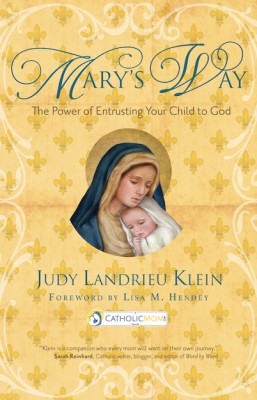 I am the kind of person who likes to dive right into a book. I fully commit, reading quickly and absorbing the story or purpose in most of my free moments. I enjoy how different authors’ develop their characters or forward their message through the written word. Catholicmom.com’s latest book Mary’s Way: The Power of Entrusting Your Child to God by Judy Landrieu Klein was a book that though I enjoyed as a whole, I could not read the way I usually do.


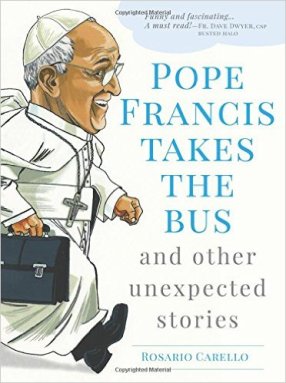 Pope Francis has taken the Church and the world by storm, but a storm that has lead to new growth, new ideas and new methods while maintaining strong roots to tradition, ritual and Church teaching. What is it about Pope Francis that is so revolutionary and at the same time so familiar? That is what Rosario Carello’s Pope Francis Takes the Bus is all about.

 Daily Graces