Book of the Dead

When I met Ben’s family, one of the stories that I heard about was his grandfather’s “Book of the Dead.” If he had a bad experience at a restaurant, gas station, you name it, often it went into the Book of the Dead. Meaning he would not go back. There was one restaurant that he didn’t go back to for something like 30 or 40 years because of the poor service he had experienced all those years earlier. When I asked Ben what the name of the restaurant was, his response was, “Which one?”

Ben’s mom still jokes about this and has her own version of the book of the dead. When we move to Kansas this winter it will be the first time she and his dad have driven in the state since the Ice/Wind Storm of one of his childhood trips to Colorado. Fingers crossed Kansas doesn’t get a double entry!

I have recently begun using the Hallow app. The app is full of Catholic prayers, resources and meditations. It’s very peaceful and has a multitude of ways to engage in prayer. There are psalms, homilies, guided silence, and Lectio Divina. I have been trying to do the guided Lectio Divina each day as well as a Divine Mercy Chaplet. I will be honest, one of the things I really like is the timer feature. For nearly every experience you can choose how long you want it to be. If I know I have time, I can do my Lectio for 30 minutes (I haven’t actually gotten to do this yet, but it’s nice to know the option is there for someday!) Or, if I know the kids will be awake soon, I can set it for only 5 or 10 (what usually happens).

The Lectio passage from a few days ago had some interesting words to say about life and death. It was a short Gospel, and to be honest it isn’t one I’ve really noticed before. The meditation was on Luke 20:37-38. This passage is part of a longer story where the Sadducees are trying to trick Jesus into making judgments about what happens after people die. Jesus, of course, answers their question in a way they don’t expect and wins the day.

Part of His answer was to point out that God is the God of the living, not the dead, for “to Him all are alive.” I had to stop and really think about that for a minute. No one is dead to God, for even the dead on earth are still living souls in eternity. Their bodies may be gone, but their soul remains forever.

This, I believe, is big news for the past year. How often have we heard people (ahem, and maybe our selves?) exclaiming that they want this year over, that it’s time to move one, that it’s dead to them, or in Ben’s grandpa’s words, ought to be put in the Book of the Dead? But no, this isn’t what Jesus wants us to do with the year we have been given!

There has been pain, suffering and death in this year. Fact. We cannot sugar coat the tragedies, the sorrow and the large sacrifices that have taken place all over the world. Many, if not most, people have personally encountered the pandemic’s devastating effects on their families, friends and workplaces. It has been a hugely difficult year. But that doesn’t mean it should be written off, left for dead or abandoned.

Jeff Cavins has an excellent book, When You Suffer: Biblical Keys for Hope and Understanding, which I highly recommend (I posted a review of it a while back if you’re interested in checking that out). Cavins fully acknowledges that suffering is painful, challenging and a universal truth of human existence. Everyone suffers. But, as Christians and especially as Catholics, suffering is much more than this. It is also an “immense treasure” because of what we can choose to do with our suffering (pg 157). Quoting Fr. Mike Schmitz, Cavins asserts: “Suffering without Christ just hurts. But suffering with Christ can transform the world” (ibid).

Many of us have experienced suffering of a new level than we have previously. We have suffered isolation, loss, loneliness, sacrifice and more. But do not let that be the end of the story for 2020. Suffering united with Christ’s passion, using the power of our suffering to grow beyond ourselves and offer it for the suffering of others, and other tools Cavins explores in his book are all ways to discover the transformative potential this year has given to us.

With Advent at our doorstep, a new liturgical year is dawning. Advent is an excellent opportunity for focused spiritual reading, intentional prayer time, and closeness with the Holy Family. If you are able to find a copy of Jeff Cavins’ book, I very much recommend it to everyone. Don’t forget about the free Advent journals I have created for your personal use as well. They are still available and will always be free to print.

I hope that you had a joyful Thanksgiving, even if it was a smaller one. If you haven’t already, this weekend is a beautiful opportunity to take some time to write down what you are grateful for this past year. It’s easy to think of negative things first. Give yourself time to really dig into the year. Go back through your planner, your Facebook or Instagram accounts. What brings a smile to your face? When did you have a sense of peace, of happiness, or contentment? This is also an excellent way to begin preparing for the Advent season.

Wishing you and yours a Happy Thanksgiving weekend and a blessed First Sunday of Advent.

Daily Graces. kktaliaferro.wordpress.com

Indelible Mark

This weekend has been the Catholic Moms Summit (if you haven’t checked it out you still have time! Hurry over, it’s all free, though if you want to be able to watch what you’ve missed later, as well as have access to the live events they held you will need to purchase the pass). I listened to a few talks, all of which were very good. My absolute favorite was by Beth Sri, Birthing 101. Beth is a Catholic wife and mom of 8. You can learn more about Beth here.

In her talk, Beth talked about the things she figured out after her first four births and wished she had known for them. I’m not going to get into the nitty gritty details of the practicalities of birth here, you can head over to the Summit if you want that information – it’s worth it, trust me!

One of the things that really left me floored was something she said toward the end about the spiritual aspects of birth. She had a spiritual director tell her, when she would share about a new pregnancy, “Thank you for your gift to humanity!” As Beth says in her talk, this sounds a bit dramatic, doesn’t it? But no! If we believe what we say we believe, if we as parents are truly participants in creation with God the Father, how could this new little person be anything but a gift?

Beth, of course, understands this also. She concludes her talk like this:

“You’re going to contribute in an indefinite way to eternity. Not only is your little person and your experience going to make a mark on the world, but it is going to make a mark on eternity. Forever, this new soul will exist forever.”

Wow, just wow. Taking this opportunity to announce we are going to be welcoming our 6th gift to humanity in March, I can honestly say I have not considered the indelible mark each of our children will have on eternity. On the world, yes. Ben and I have all of the usual hopes parents hold – we hope our children are faithful, brave, compassionate, truthful and cultivate all the other good virtues. We pray that they follow their vocation, that they listen to God’s Will in their lives and that they discover that happiness lies in self-giving love. But an indelible mark on eternity? I’m rendered a little speechless at that one.

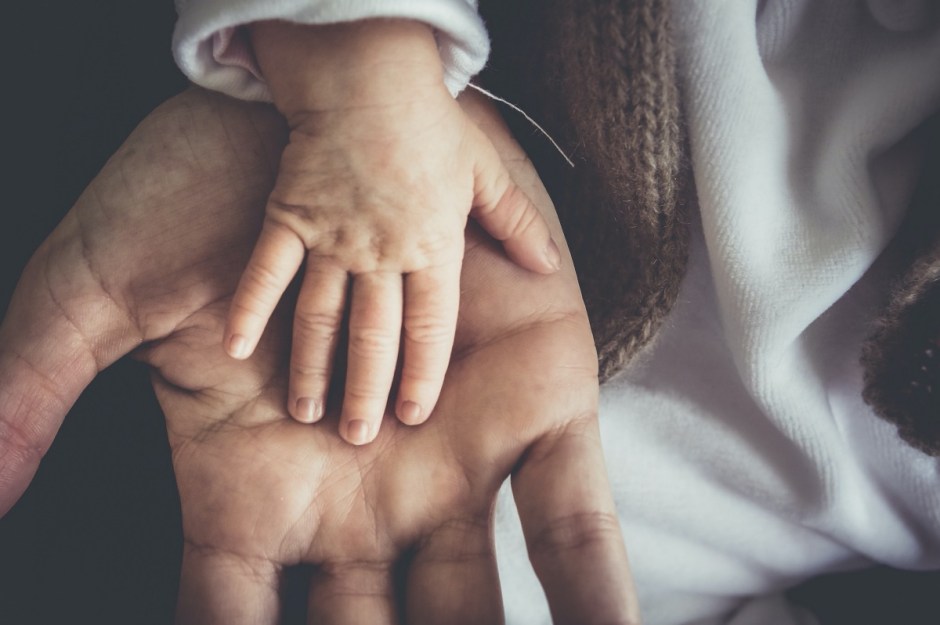
Indelible means “not able to be removed,” or similarly, “not able to be forgotten.” By conceiving our children, heaven has changed forever. Every single child, whether they are born into this world or whether their mark is made only on our hearts, will make a new impression on eternity which cannot be forgotten.

God knows the number of hairs on our heads, even if your babies are born bald like mine. Not a single child is forgotten by their loving Creator, and heaven is all the better for it.

Indelible Mark #6
Daily Graces. kktaliaferro.wordpress.com

Free Advent Journals 2020

It’s that time of year again, if you can believe it. All the memes about how March lasted for 5 years, the summer was 1,000 days and that this year would never end. Yet here we are, at the end of October. In a way, Catholics get to cheat the system a little bit. We don’t have to wait for December 31, 2020 to celebrate the end of the year. According to our liturgical calendar, the new year begins the first Sunday of Advent – this year on November 29.

This year has been full. Full of emotion, full of questions, full of time. I know so many of us are hoping for some sense of closure to 2020 by the time 2021 gets here. Rather than blocking out the past 9 months, I would like to challenge all of us to use this Advent season to meditate on what God has been speaking to us. What lessons have you learned? How have you grown? What good things will you carry forward into the Christmas season?

Advent, while a festive time secularly, is also a desert time. It is a time where we relearn, each year, how to wait with hope and purpose. Taking time with Scripture is an excellent way to slow down and focus on where the Holy Spirit is leading you for the season.

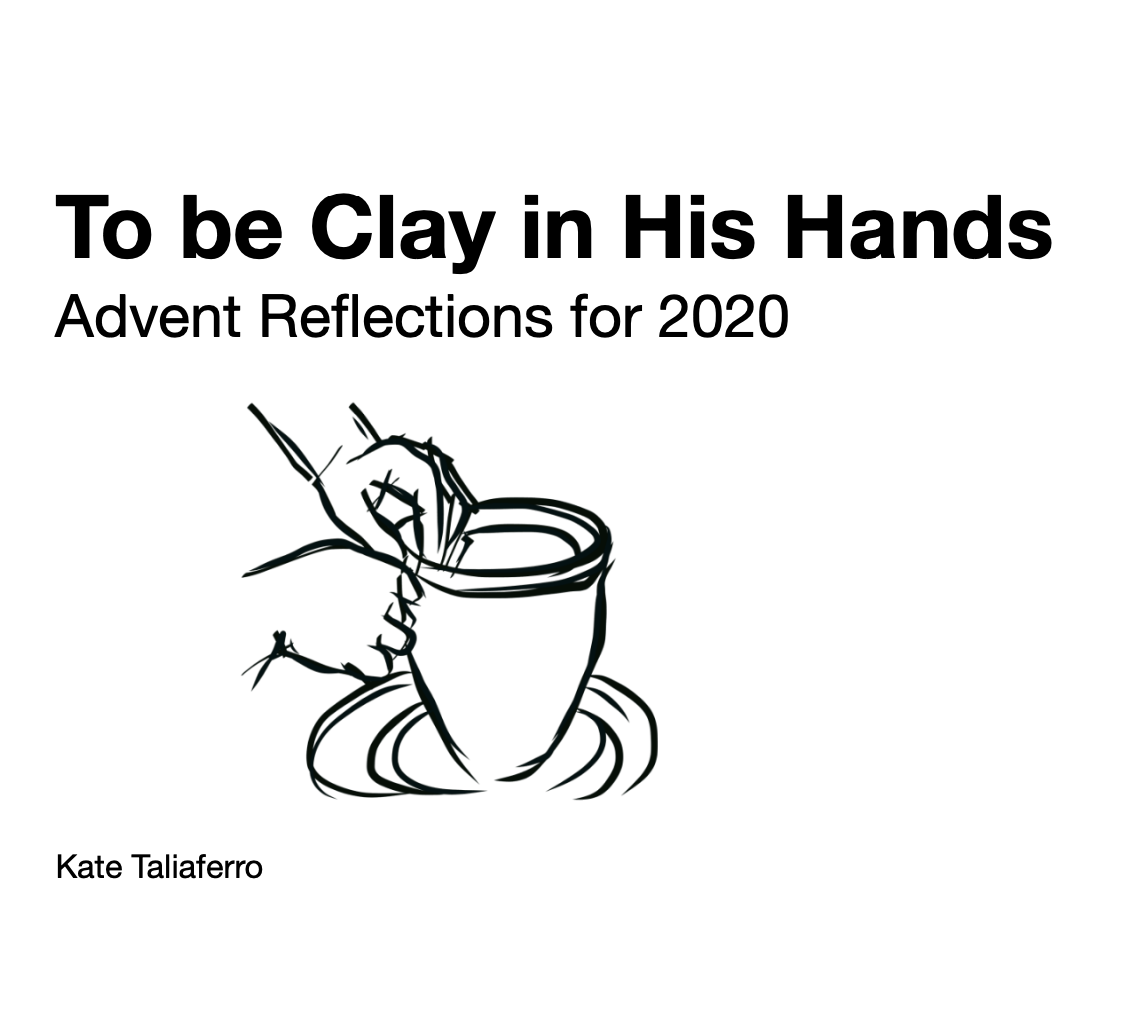
With this in mind, I’ve created two completely free Advent resources. The first is the classic Lectio Divina journal that I’ve been creating for a number of years now. In it you will find a guide for how to pray following the lectio model as well as daily journal pages. The pages have a Scripture passage selected from the day’s readings and include space for journaling, prayer and reflection. If you would like to choose your own Scriptures, there is a blank page included below as well that you can print off as many times as you would like.

The second journal is both similar and a departure from last year’s reflection journal, for those of you who used it. We are still focusing on the Sunday readings, but in a new way. Beginning on the First Sunday of Advent, each day will have a Scripture focus taken from the Sunday readings. The Scripture is accompanied by a short meditation and reflection question with space to journal.

Now, the techy stuff. There are 2 versions of each journal. One is the normal, in order, print, staple at the corner, you’re on your way. The second, for the brave and adventurous, is set up so that you can turn your journal into a legitimate booklet. You will have to print double sided either by choosing that setting on your printer, or by printing the odd pages, reinserting them into your printer however you need to (every printer is different, I’m sorry I can give better directions than that) and then printing the even pages. I highly recommend do a test of the first and second pages to make sure you have the process down before printing the whole thing.

I hope that you find these journals helpful and encouraging during the upcoming Advent season. I love hearing how they have blessed you, your families and small groups. Please feel free to let me know if you have ideas or suggestions for Lent. I would also love love love to know how the booklet printing goes – it took a lot of brain power to figure out how to get the pages in the right order and I hope it works for you.

Please share this post with anyone who is looking for a quality Advent resource and doesn’t want to wait for shipping! May God bless each of you as the year closes and Advent brings us into a brand new year.

Daily Graces. kktaliaferro.wordpress.com